
by Oluchi Ubazue | Sep 19, 2024 | Blog
The impact of global warming on Africa has been devastating, costing Africa up to 5% of its economic output. This has been particularly tough for a continent already struggling to meet its population’s basic needs. Urgent action is necessary to prevent the situation from worsening.
One of the sectors most vulnerable to climate change is Africa’s power sector. This is due to its heavy reliance on hydropower, which is sensitive to changes in rainfall patterns. Climate change is leading to more extreme weather events, such as droughts and floods, which can disrupt hydropower production.
A prime example is the Kariba Dam in Zimbabwe and Zambia, a major source of hydroelectric power in southern Africa, which has been adversely affected by recent droughts, leading to reduced electricity generation.
Moreover, climate change is increasing the frequency and intensity of heatwaves, resulting in higher demand for electricity and putting strain on power grids. In some cases, heat waves can even cause power outages.
Climate change is exacerbating challenges in Africa’s power sector, such as limited access to electricity in many parts of the continent. Extreme weather events can damage power infrastructure, leading to power outages and service disruptions, making it even more challenging for African countries to achieve universal access to electricity.
The impact of climate change on Africa’s power sector extends beyond electricity availability to affecting the cost of electricity. As the cost of adapting to climate change rises, the cost of producing electricity will also increase, potentially hindering the development goals of African countries.
It is evident that Africa needs to invest in climate-resilient power infrastructure, which will require significant financial resources. Unfortunately, Africa is only receiving a fraction of the $100 billion promised in global climate finance.
Beacon Power Services offers advanced solutions to enhance energy efficiency and grid reliability, improving stability and revenue protection for African utilities. These solutions also help reduce the impact of climate change on Africa’s power supply, making energy more dependable and sustainable.
As leaders prepare for COP29 in Baku, they need to devise a plan to help Africa adapt to climate change. This will require a significant increase in climate finance and innovative solutions.
The future of Africa’s power sector is at stake, and urgent action is needed to address the challenges posed by climate change.
by Oluchi Ubazue | Apr 4, 2024 | Blog, News
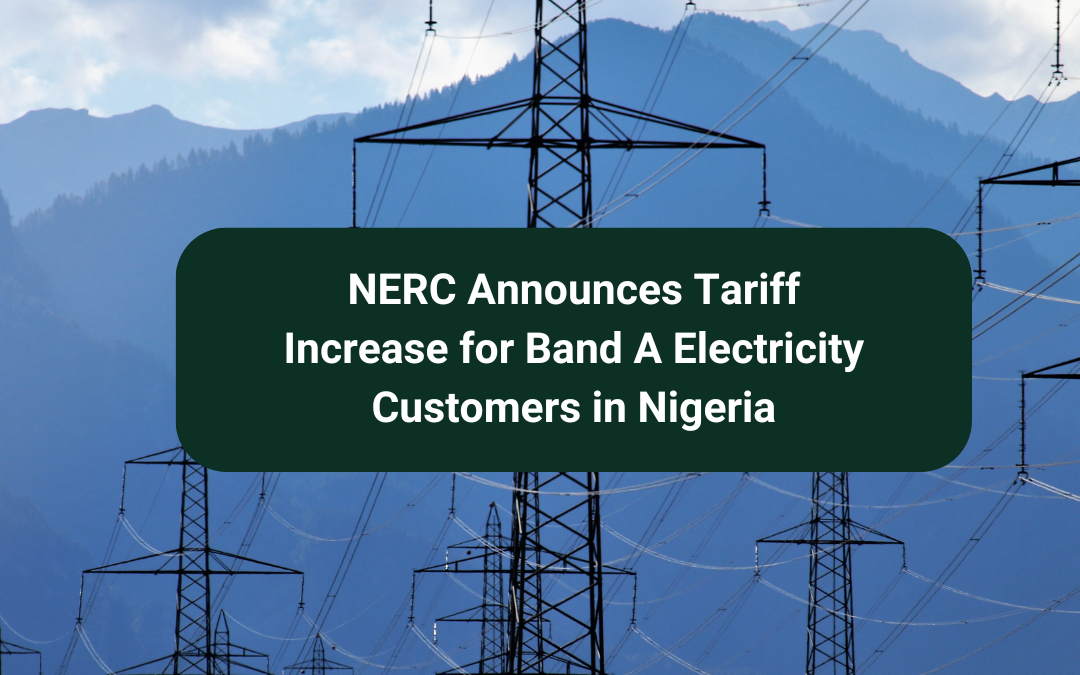
Nigeria’s Electricity Regulatory Commission (NERC) has recently announced an increase in the tariff payable by electricity customers under the band A category(up to 20 hours of electricity a day). The new tariff will be N225/kWh, up from N68/kWh(a 300% jump). According to NERC, this category of customers constitutes about 15% of the total Nigerian electricity customers.
The tariff increase is reportedly due to the recent increase in the base price for natural gas from $2.18 to $2.42 per metric million British thermal unit (mmbtu) by the Nigerian Midstream and Downstream Petroleum Regulatory Authority (NMDPRA). This month, the federal government will allow electricity distribution companies to raise prices to N145 ($0.15) per kilowatt-hour for Band A customers from N68 naira.
Despite the privatization of the power company into 11 distribution companies (DisCos) and multiple generation companies (GenCos) in 2013, there is a debt burden. The federal government does not allow DisCos to charge enough to recover the cost of distributing electricity, with the government paying the difference as a subsidy to companies in the sector. Electricity subsidies gulped around N50 billion naira monthly.
NERC has assured a speedy provision of meters across these customers to ensure they are not over-billed, especially in the new era. NERC also clarified that the metering rate in this category is up to 80 percent. However, despite these measures, the electricity sector remains a challenge. It is crucial for the government to attract new investors to revive the industry and ensure a sustainable future for the sector.

by Oluchi Ubazue | Dec 12, 2023 | Blog
Data-driven solutions play a vital role in unleashing Africa’s energy potential and driving sustainable growth. By utilizing real-time data analytics, utilities can gain valuable insights into energy consumption patterns and grid performance, which help them identify areas for improvement and take targeted interventions to reduce energy losses, improve power delivery, and ensure reliable and efficient service.
One of the key advantages of data-driven solutions is their ability to provide invaluable insights into energy consumption patterns. By analyzing data from smart meters and other sensors, utilities can identify areas of high energy use and explore ways to reduce consumption. This can include upgrading equipment, implementing energy efficiency measures, and educating customers on best practices for energy conservation. Utilities can reduce their carbon footprint by reducing energy consumption and promoting sustainability.
In addition to energy consumption, data-driven solutions can provide insights into grid performance. By analyzing real-time data on voltage, load, and other factors, utilities can identify potential issues before they become major problems. This can include overloaded circuits, equipment failures, and other issues that can cause power outages. With this knowledge, utilities can implement targeted interventions to address these issues and improve grid performance.
Advanced metering systems and data-driven billing solutions ensure accurate customer billing and minimize revenue loss. This financial stability empowers utilities to reinvest in infrastructure upgrades, expand their reach, and ultimately benefit the company and its customers. Interactive customer portals and mobile apps provide a transparent and convenient platform for customers to manage their accounts, monitor energy usage, and report outages. This enhances customer satisfaction and reduces operational costs associated with manual inquiries and service calls, fostering a positive and efficient customer experience.
Utilities can optimize operations, enhance customer service, and champion a sustainable future by unlocking data-driven insights. Africa has the potential to become a global leader in clean energy. With innovative technology and data-driven solutions, we are dedicated to providing the solutions and expertise necessary to make that vision a reality.
by Oluchi Ubazue | Sep 20, 2023 | Blog
Power grid collapse is a major challenge threatening progress and prosperity across Africa. Outdated and inadequate infrastructure results in frequent blackouts, voltage fluctuations, and energy losses, hindering economic growth and social development. As electricity demand rises, the risk of grid collapse becomes more palpable.
Power grid collapse can be financially devastating for utilities, as they must spend much money on emergency repairs, lost revenue, and customer compensation. This leaves them with fewer resources to expand and upgrade the grid. Frequent blackouts also lessen trust in the grid’s reliability, making it difficult to attract investors and secure financing for infrastructure improvements. Power outages can also disrupt industries that depend on consistent electricity, leading to production disruptions and increased operational costs, job losses, and economic decline.
To tackle the challenge of power grid collapse, it is essential to invest in infrastructure. Governments and utilities must prioritize modernizing and expanding the grid, upgrading transmission and distribution networks, and implementing innovative grid technologies. Embracing digital technologies and smart grid solutions can enable real-time monitoring, predictive maintenance, and efficient load management, proactively addressing issues and reducing the risk of grid collapse. Collaboration among African nations can create a more interconnected and resilient power grid through cross-border energy trading and sharing resources, which can stabilize supply and mitigate the effects of localized grid failures.
Power grid collapse is a significant challenge for utilities, but it is not impossible to overcome. By making strategic investments, embracing technological innovations, and fostering cooperation, utilities can create a sustainable and reliable power grid. Beacon Power Services provides digital technologies and smart grid solutions to modernize and expand Africa’s power grid, proactively addressing this and reducing the risk of grid collapse.
by Oluchi Ubazue | Sep 1, 2023 | Blog
Energy availability in Africa varies significantly across different regions. While some areas possess plenty of energy resources, such as oil, natural gas, and abundant sunlight, others suffer from inadequate energy supply. Consequently, the need for reliable, affordable, and sustainable energy sources has become increasingly urgent. Utilities are tasked with meeting the growing demand for power supply while reducing carbon emissions, and data-driven insights have become essential in achieving this delicate balance.
Advanced data analytics tools enable utilities to transform their management, distribution, and optimization of energy resources by analyzing energy consumption. These tools can collect, process, and interpret vast energy consumption data, empowering utilities to make well-informed decisions, accurately predict demand patterns, and allocate resources more efficiently.
Real-time monitoring is a crucial aspect that enables utilities to keep track of energy consumption levels at various scales, ranging from individual households to entire cities. This helps identify any anomalies promptly and aids in reducing energy wastage and responding effectively to fluctuations in demand. In addition to real-time monitoring, precise demand forecasting is crucial to avoiding energy shortages or surpluses. By employing machine learning algorithms to analyze historical data and forecast future consumption patterns, utilities can optimize resource allocation, ensuring that the energy supply meets the demand.
Enabling consumers to gain insights into their energy consumption patterns helps them reduce their bills and encourages conscientious energy use, leading to a smaller carbon footprint. Additionally, it significantly mitigates climate impact by allowing utilities to monitor energy consumption in real time and make data-driven decisions. This aligns seamlessly with global efforts to combat climate change.
The future of power utilities in Africa hinges on their ability to innovate, adapt, and embrace sustainable practices. Beacon Power Services equips utilities with the tools to make data-driven decisions and paves the way for a brighter, greener, and more energy-efficient Africa. With Beacon Power Services, African utilities have a formidable ally in their quest for a sustainable energy future.
